
Confirm a NORCOR Juvenile Release
There is no public juvenile released-inmate lookup documented for Sherman County. That absence is a protection boundary, not a gap to fill with the adult roster or an unofficial list. A person with lawful standing should begin with the agency or court already handling the matter. Use the youth's correct legal name, case information, and relationship to the youth. Staff may need to verify identity and authority before sharing any detail.
A careful confirmation path keeps each office in its proper role:
- Contact NORCOR Juvenile Detention and explain the lawful relationship or role that supports the inquiry.
- Ask which court or agency controls the youth's custody, release, or placement information.
- Use the juvenile court or OYA channel named by staff, and provide case identifiers when permitted.
- Check VISOR only when the responsible source says the youth is covered and an alert route is available.
- Rely on the official order or agency record for the release or transfer, not an online absence.
The NORCOR Juvenile Detention overview is the official facility starting point. It should be used with the appropriate juvenile-court or agency channel, not as an invitation to seek protected details about an unrelated youth.
NORCOR Juvenile Release Contact
NORCOR's direct site currently lists 541-298-1447 for Juvenile Detention. That direct number controls over older or variant figures on secondary pages. The facility can route an authorized caller, but it may not be able to disclose status or placement merely because a name is supplied. State the reason for the inquiry, the caller's role, and any case number the responsible authority has provided.
211 Webber Street
The Dalles, OR 97058
Phone: 541-298-1447
Fax: 541-298-1258
Email: juvenile@norcor.co.wasco.or.us
Questions about a Sherman County youth can involve both county and regional institutions. The Sherman court or juvenile authority may own the order while NORCOR owns the detention event. OYA becomes the proper source when state youth custody begins. Asking NORCOR which authority controls the next record is often more accurate than sending a broad public-record request to several offices.
- Release
- A completed end of the particular detention event, which may lead to a guardian or placement.
- Transfer
- Movement to another custodial authority, not a public community release.
- Placement
- A court- or agency-directed setting after detention.
- Lawful standing
- A recognized role or authority that permits a person to seek restricted case information.
Note: Use the current NORCOR juvenile number and expect staff to verify the caller's identity, role, and authority before discussing records.
Regional NORCOR Juvenile Custody
Sherman County does not operate a separate juvenile jail in Moro. The official Community Corrections material identifies NORCOR in The Dalles as the regional complex serving the county. This cross-county structure matters. The place of detention can be in Wasco County while the case originates in Sherman County. The person requesting information should name both the originating county and NORCOR when staff need help locating the correct authority.
The regional model also prevents a simple “county roster” approach. One public list cannot represent every youth record, court order, guardian release, OYA transfer, or protected status across four counties. Juvenile confidentiality and disclosure limits apply regardless of convenience. The right source may confirm information to an authorized person while properly withholding it from the general public.
The official facility layout and program description appear on the NORCOR juvenile program page.
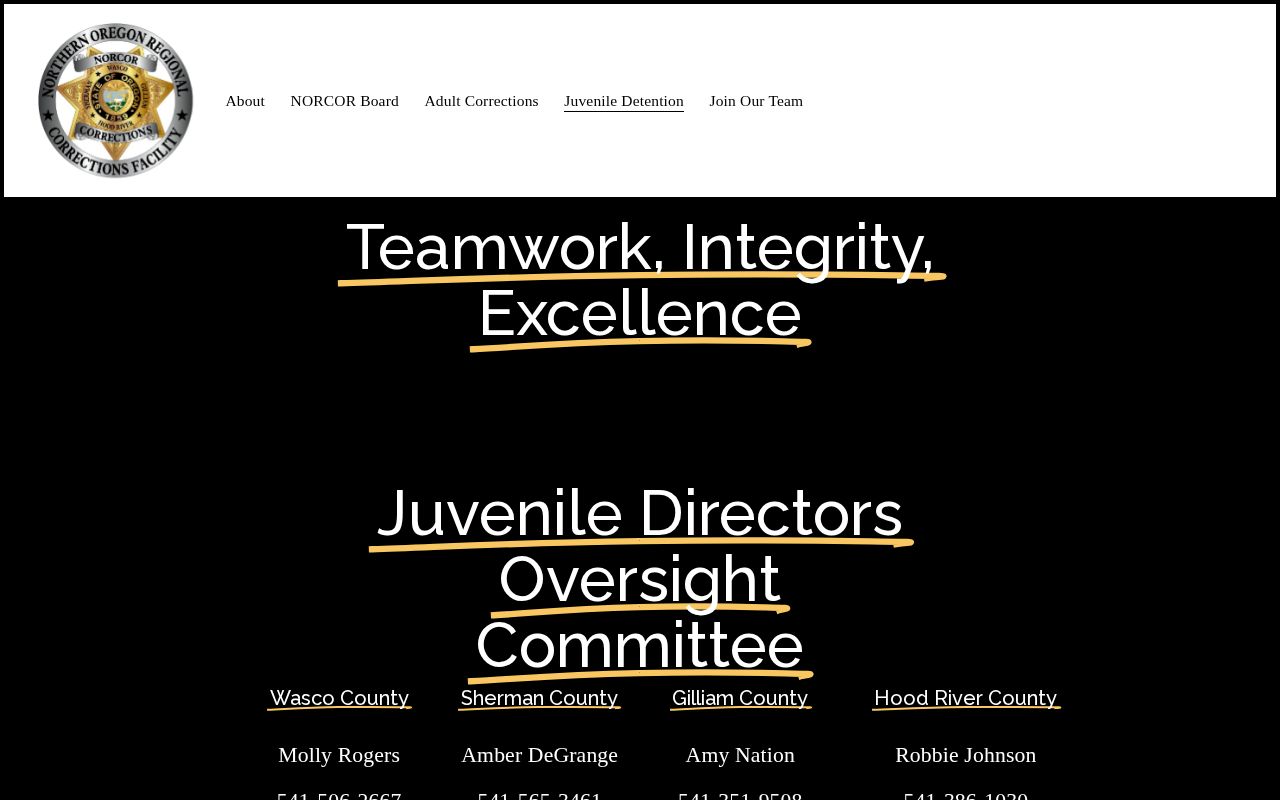
The facility source confirms the distinct juvenile operation. It should never be merged with adult roster rules, adult booking fields, bail procedures, or adult release-photo expectations.
NORCOR Juvenile Release Notifications
Oregon replaced VINE and VINELink with the Victim Information System in ORegon, known as VISOR, in October 2023. Official state sources say OYA is among the contributors. Prior Oregon VINE registrations carried into VISOR. That makes VISOR a possible notification layer where a covered youth record and the user's role permit it. It does not make juvenile details public or turn the portal into a certified release record.
The current portal can deliver release, transfer, escape, death, and projected-date-change alerts for covered records. A transfer alert must not be read as release into the community. Portal information is periodically updated and may be unavailable when an agency feed is offline. If the responsible source is offline or a protected youth cannot be found, contact the facility or victim-services channel rather than infer a custody change.
The Oregon Youth Authority victim-services page documents the state transition and is the matching source for this facility.
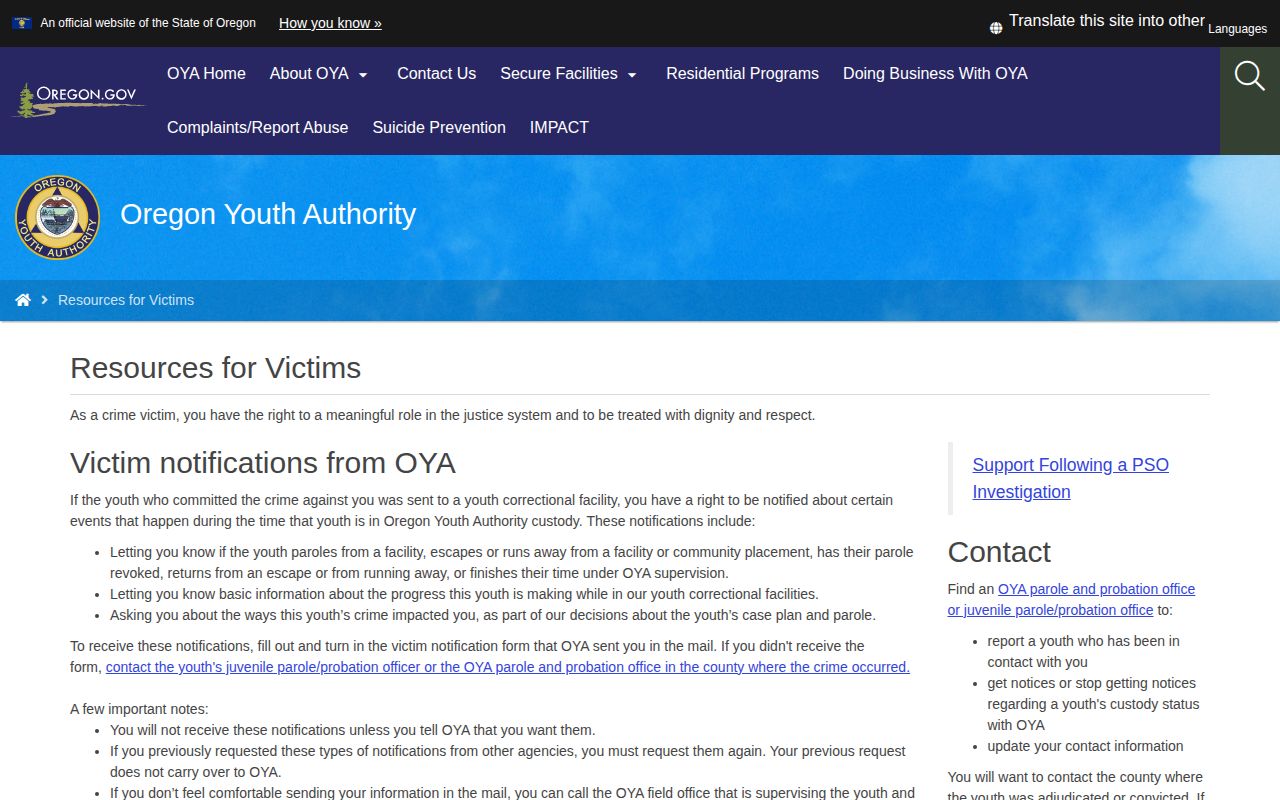
Current VISOR instructions do not document the old four-digit PIN step. The PIN belonged to legacy phone-based VINE. Follow the choices displayed by the present system and confirm an event through the responsible court or agency.
NORCOR Juvenile Record Boundaries
Juvenile records can be confidential, sealed, omitted from public court tools, or otherwise restricted. These limits protect the legal process and the youth. They also mean that a public “no result” has many possible causes. It cannot prove that the person was never detained, has been released, or has no ongoing placement or court obligation.
Do not substitute Sherman Circuit Court's ordinary adult criminal search for a juvenile-status check. Oregon's online court systems omit protected categories, including juvenile matters. Do not substitute the adult NORCOR roster either. The Sherman County release-record overview is useful for understanding the other adult custody systems, but its adult search routes do not override juvenile access restrictions.
When lawful access exists, request only what is needed. Ask for the order, custody event, release direction, or placement information relevant to the authorized purpose. Staff can explain identification requirements and which authority owns the record. This narrower approach respects the youth's privacy and produces a more reliable answer than broad name searching.
A lawful requester may need records from more than one custodian. NORCOR can document the detention event it controls. The juvenile court can address the order that authorized release, continued detention, or a new placement. OYA can address state youth custody within its authority. These sources may use different event dates because a judicial decision can occur before staff complete a physical transfer. Ask each office for its own existing record instead of asking one agency to interpret another agency's file.
Victim-services professionals have a distinct role from a general public requester. They can use the notification and agency channels authorized for the case, while public access may remain limited. Parents and guardians should follow the court or facility instructions tied to their legal status. An attorney can seek the record through the case process. In every route, a clear case number, youth identity, requesting role, and narrow question help staff identify what may lawfully be confirmed.
Timing must also be described with care. A planned court date, review, or placement discussion is not a completed release. Administrative steps, transportation, receiving-agency acceptance, or a changed order may affect when a youth leaves the facility. NORCOR staff and the controlling authority can distinguish an expected event from one that has occurred. Anyone arranging an authorized pickup should use direct instructions from those offices and avoid relying on a date passed through an unrelated person or public source.
Note: A juvenile departure may lead to a guardian, approved placement, or OYA authority, and those outcomes require different official confirmation.